Frequently asked questions.
Frequently Asked Questions
Do corgis shed a lot?
Yes, corgis are a double-coated breed and do shed. Most will have heavier seasonal sheds twice a year, but light shedding can happen year-round. A quick daily brushing (we recommend tools like the Furminator or a slicker brush) helps keep hair under control. Unlike many breeds, corgis don’t require regular trips to the groomer—just brushing, nail trims, and the occasional bath.
How big will my corgi get?
Our puppies typically mature between 20–30 pounds, depending on their specific lines. They’re compact enough to travel easily but sturdy enough to keep up with an active lifestyle.
Do corgis have any health issues?
Like all breeds, corgis can be prone to certain health conditions, such as hip dysplasia, progressive retinal atrophy (PRA), and degenerative myelopathy (DM). We are committed to breeding from healthy, carefully chosen lines to reduce risk. Our focus is on producing sound, well-rounded dogs with excellent dispositions. Our dogs do not have any health issues and we have not detected any health issues in their offspring. They are generally quite healthy dogs.
Why are your puppies priced the way they are?
We’ve invested years into cultivating the right genetics, conformation, and temperament. Our puppies are raised in a family environment with exposure to livestock, children, and daily home life, which builds their confidence and adaptability. They come from carefully selected parents who are health-tested, well-socialized, and consistent producers of the type of dogs we are proud to stand behind. Many of our families return for second (or third!) puppies because they know what to expect from our program.
Will my puppy stay the same color as they are now?
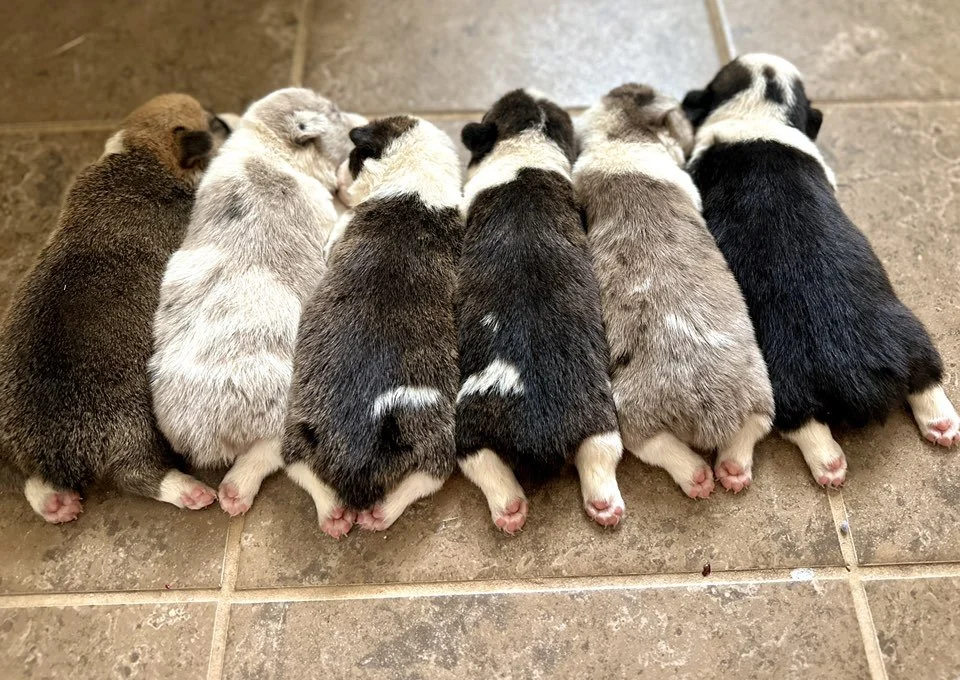
Not always! Corgi coats can change as puppies mature. A puppy that appears mostly black may lighten into brindle, red-headed tris can develop more red or white as they grow, and merles often fade into a more brindled appearance over time. These changes are part of the breed’s charm and individuality.
Do you ship puppies?
Yes. We can arrange transport within the U.S. for families who can’t pick up in person. Puppies leave with their first round of vaccinations, deworming, tails docked and dewclaws removed (unless otherwise requested), registration papers, a starter bag of food, and a small puppy pack with helpful items for the transition.
Why are Pembroke tails docked?
Tail docking has been a long-standing tradition in Pembroke Welsh Corgis, originally done to prevent tail injuries while herding. We continue this practice unless a family specifically requests otherwise.
Can I get a female if I already have a male (or vice versa)?
In general, corgis are very adaptable and do well in multi-dog households. Male-female pairings often work best, but the success of introductions depends on individual personalities, training, and management. We’re happy to talk through what might be the best fit for your family.
How do corgis do with kids and other animals?
Corgis are wonderful family dogs. Our puppies are raised around children, cats, horses, chickens, rabbits, and more, so they grow up confident and social. They’re playful and loyal with kids, and their adaptable nature makes them a good fit for families who want a dog that can keep up with farm chores, outdoor adventures, or simply relaxing at home.